


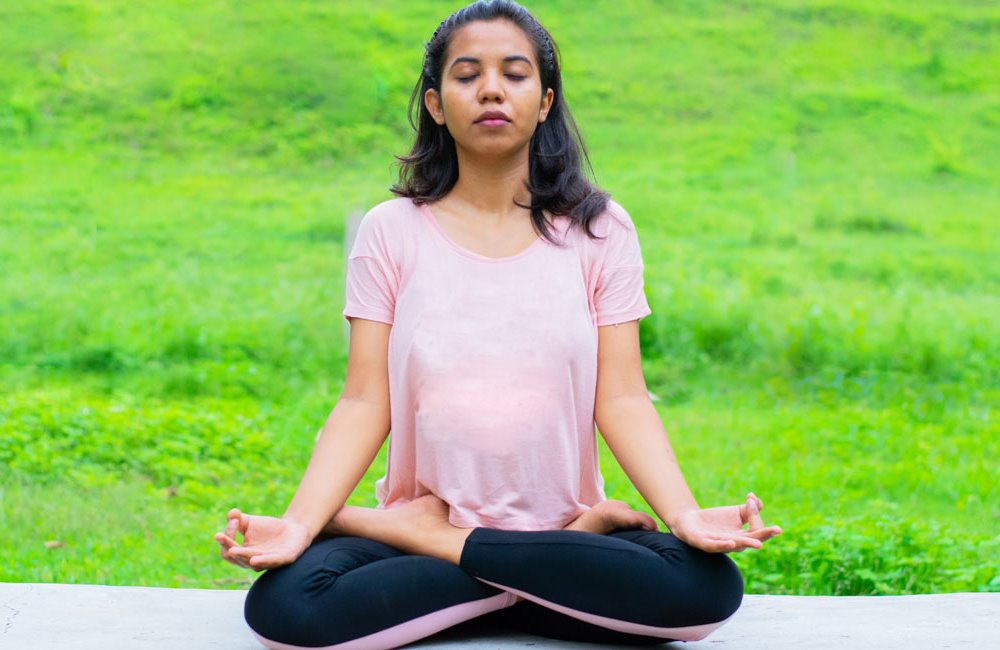
Yoga meditation actually combines the benefits of yoga physical exercises with positive energy of meditation practice. In fact, the word “Yoga” means (union with the divine) and it was created thousands of years ago to help people gain control of their own life force which is a spiritual energy called “Kundalini”. Yoga meditation will also help you achieve better mental health and overall wellbeing. However, when doing yoga, try choosing a good location and prepare yourself adequately.
STEP-1: How To Create A Meditative Environment:
> Choose a quiet environment: Select a location that is not cluttered or loud. In fact, you should feel at ease before starting a yoga meditation session. An ideal location should either be free from technology and machinery, or block sounds that may distract our minds. Additionally, a place with a lot of natural light is preferred over electrical lighting.
> Select a place with natural heat, cooling & fresh air: Choose a spot with radiant heat like wood fire or hydronic heat. Additionally, create a cross-flow by opening a door or window so that fresh air is pumped into the space. However, if you live in a high pollution area, then performing yoga meditation inside may actually be preferable. Remember to get a good yoga-mat for added comfort.
> Time meditation sessions around meals: Try to schedule your meditation when you are comfortable like, perhaps a few hours after a meal. You may also consider eating a light snack before mealtime and then meditate.
> Carry-out light stretches & exercises: When you get a brief warm-up, the body will be more limber, relaxed, and able to focus on meditation. In fact, you will be able to sit for longer periods of time if you’re more limber. So, focus on your core and back for a few minutes coupled with various light twists and bends. Additionally, Sukshma Yoga exercises may be very beneficial and these include: using 2 fingers to lightly squeeze the eyebrow several times, rolling the eyes in circles several times, rubbing your temples and jawline, and rubbing your ears while pulling downward softly.
STEP-2: How To Perform Poses Suited to Meditation:
> Begin by sitting upright: You can sit anywhere but with a good posture like on the floor or chair. Likewise, pull your chin slightly backwards to aid in spine alignment. In fact, being comfortable is very essential when trying to focus on meditation. On the other hand, crossing your legs is not necessary, but if you sit that way then consider alternating which leg goes on top each time you meditate.
> Practice deep breathing: Deep breathing is a good way to prepare for a meditation session. So, focusing on breathing helps you ease the body and mind while improving on focus. In fact, a breathing technique called “Nadi Shodhan Pranayama” is good one because it involves placing the index and middle finger of your right hand between your eyes, and the remaining fingers around your nose while the thumb will be on your right nostril. After, breathe deeply into the left nostril while closing the right nostril, then alternate pressure and exhale out from the right nostril.
> Do the Samasthiti pose: This pose is about being attentive to your own balance and steadiness. It involves placing your palms together and then breathe for while raising your hands over your head and exhale as you return them back to your chest. Do this pose for a minute or two so as to really settle yourself.
> Do the cow pose: This involves getting on your hands and knees with your palms under the shoulders for weight support. After, inhale deeply as you raise the head and upper body. Simultaneously lower your spine towards the floor and finish the pose by returning back to an aligned back while exhaling.
> Tryout the vajrasana pose: While in a sitting position, place your hands on the sides and then bring your left foot up to contact your left buttock. Repeat this process with your right foot. You will be in a squatting position and will be able to lean forward and shift your weight to the knees. After, sit back in the space between your heels while breathing normally for a few minutes in this position. By end of this pose, your toes should be touching. However, make sure to keep your core tightened to promote good posture. All in all, an upright posture is easier with the vajrasana because this pose promotes straightness with minimal effort.
> Perform Ujjayi breathing: This pose involves a long and smooth breathe. In fact, it’s great for giving you energy and making you feel calm. To do this pose, sit cross-legged on the floor while keeping relaxed. After, take long, slow breaths inward and then exhale slowly. Make the breath as long and smooth as possible.
STEP-3: How To Focus On Your Body, Mind and Beyond:
> Get rid of distractions: For the first session of your yoga meditation, allow yourself to embrace the various things going on in your life. By recognizing the different distractions in your life, it will allow you to easily remove exterior distractions when you begin to focus. So, always let yourself feel and hear distractions. Don’t judge them as good or bad but just try to let them be.
> Try reflecting on your body: To do this, direct your attention inside to the base of your spine. After, slowly pull your attention up through the center of the body along the spinal column and then move through each part of your body. Additionally, take inventory of each body part as you move along. You should also be aware of your various senses like taste, smell, and sight. Also acknowledge your thoughts, emotions, and progression towards acceptance. Lastly, think about how your various body parts are functioning with one another.
> Train your mind to focus: To attain a higher level of concentration while meditating, your mind should gradually become silenced during reflection. In fact, the capability to keep your mind at ease is not possible if the body and breathe are not focused. To become aware of your mind, you will need to observe the mind and its impressions, ego, judgments, and discriminations. Accept the different observations for what they are whether positive or negative. Understand how your thought flows from one thing to the next and then train your mind to choose the object of focus rather than allowing consciousness to flow between objects.
> Try concentrating on a singular object: This will help you to embrace the current moment. So, redirect your attention to any object and you’ll be able to ignore more distractions as you get better at meditating. Focus on something like a dot on a sheet of paper, center point of tile or design in a floorboard
> Open the eyes slowly: When completing your meditation, bring attention back to your body by making a small movement while opening your eyes. Try to become aware of any changes you may feel inside your body or any shift in attention. So, some of the techniques to help end yoga meditation sessions include; lightly balling your fists a few times, flexing your calf muscles, smiling as a way to focus on muscles and enhance on your meditation.
